The People's Artist
I feel like this whole thing is some lame plot by Amber. Their Mark AI bot is well done and responsive to all. If you geek out on the latest episodes of Hacker, it really is interesting.
Check out:
Darknet Diaries https://podcasts.apple.com/us/podcast/darknet-diaries/id1296350485
Hacking Humans https://podcasts.apple.com/us/podcast/hacking-humans/id1391915810
Everyone else, other than me and this post, should stfu about it and stop posting stuff for clout like I am here. Even though I have not back-and-forthed with Mark Motherbong, just presenting it here from the bot response still makes it seem like I did. So I get like a 1% ranking in either direction, good or bad. “All press is good press,” John Waters said. So stupid what the internet sucks you into these days. Fake and…
Now leave me alone so I can also randomly join some witch hunt that aims to destroy someone who worked 40 years of their life to entertain us all, and who has inspired millions of people to do their own cool things in ways none of you could ever imagine — and that you simplify into the cruelest and most inhuman energy-sucking strawman connected to your vapid reptilian neediness.
Am I slightly annoyed enough to spend 20 minutes crafting this stupid post for my website? Yes. Johnny Depp is cool as shit. “Leave Britney Alone!”
In many ways, in this day and age, there is absolutely no way to prove anything anymore. The meek have inherited the earth, and they control what happens and what is perceived as real. Black-pilled.
Random guy suddenly joining Amber Heard’s witch hunt because he believes it is okay for a girl to shit on your bed. And it is way less cool when you fall for some stupid obvious pay-for-vote contest that you can easily run through AI and figure out is probably one of millions of Nigerian hookworms.
Either way, people, can we stop publishing how pathetic we all are/were for even wanting votes from everyone we have ever known and from strangers? There is no longer any way to validate such things, and so asking anyone to vote for you for this or that makes you a Nigerian scam artist who cares more about validation as an artist than the potential financial safety and data privacy of your people.
Plus, this has a high school feeling. Prom king and queen. Popularity contest for all the wrong reasons. No merit.
I’d rather be cynical and bitter than fake as shit. Meanwhile, I’ll just continue trying to give a fuck about not giving a fuck here on my own website, where I get to do what I want, express mood swings and tantrums like the dynamic person I am, and where no one ever tells me I can’t or that I did not win. More real than social media. And I don’t sell adds. And my data is still mined, but at least I am not such a diligent cogg for Facebook like I used to be. P.S. Don’t think that has not harmed me. It is basically social suicide to get off that shit. No one cares where you went or are anymore, as it is too inconvenient.
Much cooler.
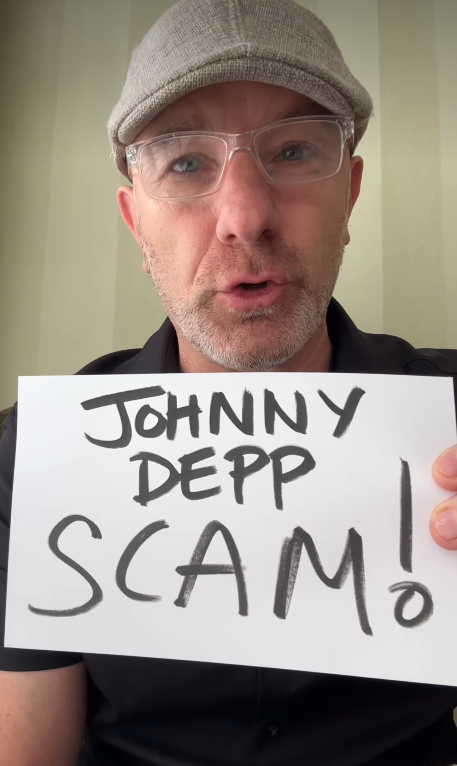
The People’s Artist and the scam allegation
The Human Part
I am writing this with AI because I don’t want to waste days and days doing all of this manually. Fuck that. That would be a scam in itself, getting me to do paperwork instead of making songs or whatever else is cooler. That is part of the story, not something I am going to hide. Without AI, I probably would not have written this at all. I would have thought about it for days, maybe weeks, maybe months, and then the whole thing would have joined the rest of the archive: hard drives, folders, notes, albums, half-finished essays, photographs, construction images, strange little songs, field recordings, and all the other personal evidence of a life spent making things that mostly disappear into silence.
But now I get to give my take as if I had a ghostwriter talking to me over drinks for seven hours. Oh wait, I do have that. I am not rich, I just have AI. What is real? This contest or the critique of it? Nothing feels solid other than the fact that this whole thing is probably lame for almost everyone involved except for the paycheck-collecting genius hackers who put it together while convincing themselves they are patrons of the arts and really good people. If you can lie effectively enough to yourself, you become very powerful, and you will conquer much more worldage.
Now cut to nothing human… why? Because this is also just an exercise for me. An SEO test. Posting practice. Reps just to stay frosty and publishy. There is already such a mountain of slop competing for attention that it barely matters whether I add more information or more hallucination to the pile, because that is what everyone is doing anyway.
Someone woke up a little bitter. :)
That is the first humiliation of this era. The work can be real, the labor can be real, the instinct can be real, and still the public reality of it is almost nothing. One or two likes. The same friends. The same little flicker of acknowledgment, just enough to keep you from fully walking away, never enough to suggest that the work has crossed into the world. You start to feel like a sucker for caring. You start to feel like a dipshit for believing your own output matters. You start to feel like the desperate Instagram artist, which may be the defining unpaid labor position of our time.
Then something like The People’s Artist appears.
It does not arrive as some obvious Nigerian-prince scam. That would be easier. It arrives wearing the clothes of legitimacy: art, charity, Los Angeles, Artforum, Johnny Depp, Mark Mothersbaugh, The Art of Elysium, a $25,000 prize, the possibility that maybe this time the gate has opened. And that is the cruel part. It does not work because artists are stupid. It works because artists are already trained to live on tiny flashes of possibility. Maybe this one is real. Maybe this one gets seen. Maybe this one breaks the pattern. Maybe this is the one strange door that opens.
I entered partly because I was suspicious from the beginning. I was posting bratty little comments, poking at it, calling it fake, testing the walls. But I would be lying if I said there was no glimmer in it. I have been around strange doors before. I have been in rooms I should not have been in. I know life occasionally does something absurd and cinematic. So yes, for a millisecond, I allowed the possibility that I might somehow end up in the orbit of Johnny Depp, Doug Stanhope, Mark Mothersbaugh, or whoever else the machine was waving in front of me. That is not shameful. That is how hope works when it has been starved long enough.
What made this one different is that after you enter, after you give them your content and your answers and your little artist self, you get access to the documents. That is where AI became useful. Not as fake art. Not as some shortcut around the work. As a flashlight. I ran the agreement language through AI because AI is very good at reading the fine print that humans are constantly tricked into ignoring. We sign things blindly all the time. Contracts, platforms, apps, contests, payment pages, releases, permissions. We click through the legal architecture of our own exploitation because we are tired, busy, hopeful, distracted, broke, curious, or just trying to get through the day.
Once I looked at the rules closely, the romance started collapsing. This was not really a contest for the best artist. It was a vote machine. A marketing engine. A popularity funnel. A paid-attention structure. It asked artists to recruit their own friends, followers, families, and supporters into a system where emotional investment could become votes, and votes could become money, and money could become more pressure to keep going. The art was the bait, the biography was the costume, and the artist’s private hope was the fuel.
I got lucky because I did not ask people to vote. I did not ask anyone to pay for votes. I did not drag my friends into it. Other artists did. Some of them did exactly what the contest implicitly wanted them to do: they took it seriously, rallied their people, posted daily, asked for support, and in some cases watched their friends spend money. That is where the shame lands hardest. Not because the artists did anything wrong, but because the system made their sincerity useful. One friend of mine entered with actual community behind her, and now the whole thing looks sickening from the inside. The people who believed in her were not just giving attention. Some of them were handing over payment information to a machine they thought was helping an artist.
That is the real human damage here. Not just the money. Not just the fine print. The contamination. The artist feels stupid for entering. The voter feels stupid for supporting. The friend feels exposed for believing. Everyone gets pushed into embarrassment, and embarrassment is useful to systems like this because it keeps people quiet. Nobody wants to admit they were hopeful. Nobody wants to admit they clicked. Nobody wants to admit they thought, for one second, that maybe the world was finally handing them a clean opportunity.
Then AI enters as the second accusation. I used AI to understand the scam, and that somehow makes the writing suspect. I use AI to organize the argument, and that somehow makes the argument less real. I could write a better, clearer piece with help, and people will dismiss it as “AI text,” the same way they dismiss songs as AI if they sound too polished, or too strange, or too much like one person could not have possibly made them alone. After thirty years of playing guitar into cheap microphones, you can make one AI-assisted beat and suddenly the whole life’s work is contaminated in the public imagination. Use AI and you are fake. Refuse AI and they still cannot tell, so they suspect you anyway.
That is why this story is bigger than one contest. It is about the artist standing in a broken recognition economy where marketing is constantly confused with art. Networking is confused with art. Social fluency is confused with art. Campaigning is confused with art. Those things can be artful, sure. Some people are brilliant at them. But they are not the same as making the work. They are adjacent skills that have been promoted into gatekeeping powers. The marketers invent the gates, then call themselves the ones who know how to pass through them.
Meanwhile, the actual creative person is left with a hard drive full of personal legacy and the sick suspicion that it will all be trashed a few weeks after death. That is the brutal thought underneath everything. What does it mean to keep making work when the world mostly returns silence? What does it mean to build an archive that might never be received? What does it mean to insist, over and over, that the true value was having done the work?
I still believe that. I believe it even while I am angry. I believe the art is real. I believe my art is real. I believe the songs, photographs, books, recordings, websites, field noises, construction images, jokes, cover albums, failures, and strange little transmissions all count. I believe the archive matters even if the machine never crowns it. Maybe especially then.
So maybe the answer is simple now: stop submitting to dumb gatekeepers. Stop handing the work to systems designed to harvest desperation and call it opportunity. Stop pretending every contest is a doorway. Stop letting invented authority decide whether the work is alive.
I submit to no one.
Use me as an example if you want. Use me as one of the many desperate nobody artists who clicked because maybe this one was real. Use me as the guy from the 90s with a website, SEKDEK dot com, still proud of having squandered another golden opportunity in public. Use me as the artist looking for six likes. Six. Eight would be cooler. Use me as the failed-on-paper construction worker musician living in the strange ruins of his own ambition. Fine.
But get this part right: I did not lose this contest. I won the contest of Can’t Touch This. Dun dun dun dun. Dun dun. Dun dun.
They can harvest the votes. They can harvest the hope. They can harvest the clicks. But they do not get to decide what the work is.
Executive summary
The strongest counterargument is the right one to start with: on the present public record, The People’s Artist does not look like a fake contest with fake charities or fabricated celebrity branding. The contest is openly operated by Colossal Management, LLC; the beneficiary, The Art of Elysium, publicly confirms that it is the nonprofit beneficiary but does not run the contest; and the donation intermediary, Action Initiative Team, is a real IRS-recognized 501(c)(3) with tax-exempt status since January 2025. Johnny Depp’s association is also documented on the official contest site and in Colossal’s own March 2026 press release.
The better-supported critique is narrower and more serious: this is a highly monetized popularity-fundraising mechanism dressed as an art opportunity. The winner is chosen by public voting, one free vote is allowed every 24 hours, and additional votes are sold at $1 per vote. The official rules state that donations go first to AIT, and only after deducting 36.5% competition fees, variable costs such as payment processing, operating costs, and prize costs, plus a 1% retained percentage by AIT, are funds granted to The Art of Elysium. AIT separately says that for campaigns it handles, no less than 50% goes to the partner charity, but the exact net pass-through for this specific contest is not yet publicly reported. That makes the “support a great cause” framing real, but materially incomplete unless a reader also sees the detailed rules. Confidence: high.
The public complaint record against Colossal across multiple contests is substantial and patterned. Better Business Bureau pages document complaints about hidden vote totals, opaque group structures, denied refunds, disputed transactions, post-hoc vote verification forms for “top voters,” eligibility problems, and allegations that rankings or odds were misleading. BBB’s own profile currently shows 13 total complaints in the last three years and 6 closed in the last 12 months. These complaints are evidence of persistent consumer dissatisfaction and alleged harm; they are not proof, by themselves, that People’s Artist vote totals are manipulated or that card fraud occurred in this specific contest. Confidence: moderate to high that the complaint pattern exists; low that fraud is proven for People’s Artist itself.
The most important bottom line is this:
· “Fake contest / fake charity chain”: not supported on current evidence. Confidence: high.
· “Pay-to-vote popularity engine with opaque totals and hard-edged legal terms”: supported by the official rules and pages. Confidence: high.
· “Operator-level pattern of complaints involving refund denials, disputed charges, and opacity”: supported. Confidence: moderate to high.
· Johnny Depp involvement: verified. Confidence: high.
· Mark Mothersbaugh’s formal role: public use of his name is documented in participant-facing social snippets, but I did not find the same clarity on the core public rules/home/FAQ pages. Confidence: low to moderate.
· Direct credit-card fraud tied specifically to People’s Artist: insufficient evidence found. There are operator-level complaints and one BBB Scam Tracker report about a different Colossal contest. Confidence: low / unverified.
What the primary record establishes
The official contest architecture is unusually explicit if you read past the marketing layer. The Art of Elysium’s own FAQ says Colossal operates the competition on behalf of AIT, that The Art of Elysium is only the beneficiary, and that the winner is selected solely through public voting. Colossal’s own FAQ likewise describes itself as a professional fundraiser and states that donations go to DTCare or AIT, not directly to the named beneficiary.
The contestant pages show the monetization plainly. A public People’s Artist profile page offers 1 free vote, then paid bundles of 10, 25, 50, 100, and 250 votes, with an “other amount” field at $1 per vote. The same page says the public decides who will appear in Artforum, take home $25,000, and exhibit at The Art of Elysium’s salon.
The fee structure is the central factual point. The rules state that donations go to AIT, which then grants them to The Art of Elysium only after deducting 36.5% competition fees, plus variable costs including payment processing, operating costs, and prize costs, plus a 1% retained percentage by AIT. AIT’s own “process” page separately says that no more than 36.5% goes to the professional fundraiser, no more than 13.5% goes to fundraiser expenses for a specific campaign, 1% supports AIT, and no less than 50% is granted to the partner charity. Those two documents are directionally consistent but they do not give a contest-specific audited final percentage for The People’s Artist.
The transparency limits are also official, not speculative. The rules allow one free vote every 24 hours and say the operator may create additional voting mechanisms such as promotions like “2-for-1 votes,” at its sole discretion. Public voting began on May 4, 2026, but the entry deadline ran through May 13, 2026. That means the contest can accept entrants after voting has already begun. The rules also say the operator, in its sole, absolute, and complete discretion, chooses which entrants become competitors. This directly supports one major criticism: the early-stage odds and competitive field are not fixed when public voting starts.
The same rule set also shows a dense control structure around content and remedies. The rules say entrants grant a limited, non-exclusive, non-transferable license and that entrants retain ownership rights over submitted photographs. But the Terms page separately says entrants “expressly assign any intellectual property rights” in submitted or additional photographs to the operator and waive related claims. That is not a small drafting quirk; it is a direct inconsistency between the Rules and Terms on an artist-rights issue. Confidence: high that the documents conflict.
The Privacy Policy confirms use of Stripe for payments, analytics, and fraud detection, and says the site may use the Meta Conversions API and Meta Pixel to collect page-view, IP, and transaction/action data for analytics and ad measurement. It also says limited information may be shared for cross-context behavioral advertising. The operator’s chargeback-specialist job posting separately says “Braintree and Stripe system experience” is a plus and describes a role devoted to researching chargebacks, countering disputes, monitoring fraud, and tracking win/loss rates. That does not prove unusual fraud levels, but it does show chargebacks and fraud management are operationally significant enough to hire for directly.
The remedy structure is also restrictive. The rules impose a no-refund policy once a vote is cast, say that all donations are immediately final and non-refundable, require binding arbitration in Phoenix, Arizona, waive class actions, and allow the operator to cancel, suspend, terminate, or modify the competition if integrity issues arise. The rules also state that the operator does not monitor off-site activity and is not responsible for off-site misleading or deceptive promotional tactics. That matters because the system relies on entrants driving outside traffic from social media and personal networks.
Complaints, disputed charges, and chargeback evidence
The BBB complaint record is the cleanest publicly accessible body of user allegations because it preserves both the complaint and Colossal’s response. BBB currently shows 13 total complaints in the last three years for Colossal’s Phoenix profile. Several are especially relevant to the “fundraising/voting scam” allegation, even though they concern other Colossal contests rather than People’s Artist specifically.
One February 2026 BBB complaint described an overnight drop from 1st to 6th place, alleged lack of vote transparency, and argued that the hidden totals and ranking shifts created financial pressure to spend more. Colossal responded that rankings update automatically based on verified votes and said it does not publicly disclose individual vote totals in order to protect competition integrity. That response is important because it confirms the core opacity complaint: there is no public vote ledger, only the operator’s assurance.
Another BBB complaint, filed in September 2025, alleged $2,775 in charges across 64 transactions that the complainant says they did not all make. Colossal responded that it had already provided receipts, reiterated that donations are final and non-refundable, and said there are no other ways to donate except the vote button. That exchange does not prove unauthorized charges by Colossal, but it does document a consumer dispute over repeated transactions and the company’s reliance on receipts and no-refund rules to answer it.
A March 2025 complaint about FabOver40 alleged that after donating hundreds of dollars, the donor suddenly received a request for credit-card confirmation and learned that votes might not count unless verified by the next day. Colossal’s response is unusually revealing: it confirmed that messages sent through an e-sign process were part of a “standard” vote verification process for top voters, meant to confirm that votes were cast by the legal cardholder. Colossal also said it works directly with card issuers in disputed-transaction cases. This is not evidence of fraud; it is evidence that the voting model generates enough disputed or suspicious activity for downstream cardholder verification to be built into operations.
Other BBB complaints hit the same pressure points. One says a contestant reported suspected cheating and asked for refunds after family members donated more than $6,000 combined, only to be refused refunds. Another alleged misleading group-size and odds information, arguing that participants were led to believe they had a materially better chance of winning than they really did. Colossal denied wrongdoing and responded that late entries and withdrawals can alter group sizes, a defense that is partly consistent with the official rule that entries remain open until May 13 even though voting begins May 4.
BBB’s Scam Tracker contains an additional March 2026 report tied to another Colossal contest, AmericasMostArtisticKid.com. The reporter alleged a donation-for-votes system, said paid votes were later removed, and claimed processed donations were reversed without explanation. BBB itself warns that Scam Tracker entries are based on victim accounts and can use real company names in scam reports. So this source is useful as a lead, not proof. Still, it shows that concerns around art-themed Colossal contests are not confined to People’s Artist alone.
Reddit and social posts amplify the same themes, but they should be treated as anecdotal. In a May 2026 r/ContemporaryArt thread about The People’s Artist, Colossal itself entered the discussion and described the contest as a public-facing fundraiser. Users replied that the art sits below the fundraising and self-promotion components, and several described the model as predatory or a grift. Another Reddit user on a broader Colossal thread claimed 28 charges totaling roughly $1,000 appeared after what they believed was a single $25 donation. Again: allegation, not adjudicated fact.
Public artist-withdrawal posts also exist. Search-result captures show multiple Instagram and Facebook posts from artists saying they withdrew from The People’s Artist over concerns about paid voting, copyright, or the overall structure. One widely circulated backlash thread on Instagram was credited to Tara Rule, and subsequent posts explicitly thanked her for surfacing concerns. Those posts show reputational blowback and artist skepticism; they do not independently prove fraud.
Celebrity and partner claim verification
Johnny Depp: verified. The official contest site says the competition is “Presented by Johnny Depp.” Colossal’s March 2026 press release says registration is open for The People’s Artist “presented by Johnny Depp,” quotes Depp directly, and includes a PR image captioned “Johnny Depp presents The People’s Artist.” The Art of Elysium’s own page says it is proud to be the beneficiary of the competition “hosted by Johnny Depp and administered by Colossal.” That is enough to reject the claim that Depp’s name was fabricated out of thin air.
The Art of Elysium: verified, but its role is limited. The Art of Elysium states that it is the beneficiary, that Colossal runs the contest for AIT, and that The Art of Elysium does not manage the competition or select the winner. That distinction matters because contestants may read the nonprofit’s involvement as a quality signal while the nonprofit expressly says it is not administering the competition logic.
Artforum: partially verified, but the exact nature of the relationship is still unclear from public materials I found. The rules value the magazine component at $15,000 and describe it as a photo shoot yielding a minimum two-page appearance in Artforum magazine. The same rules also say the winner may not use the title in a way that suggests Artforum is endorsing or participating in the winner’s own commercial use of the contest result. That does not prove the prize is merely an advertisement, but it does show the rules are careful to limit any implied endorsement. In an analogous Colossal contest investigated by 6abc, Good Housekeeping told the station that the winner would appear in an advertisement, not as a contest sponsor’s editorial feature. For People’s Artist, the editorial-vs-paid-placement question remains unverified on the public record I reviewed.
Mark Mothersbaugh: public use of his name is documented, but I could not verify a formal core-site role from the same level of primary evidence. Participant-facing social snippets repeatedly reference him in connection with the contest: search captures include phrases such as “Mark Mothersbaugh is back in your dashboard,” “I’m your host, Mark Mothersbaugh,” and participant posts describing the contest as hosted by or connected to him. But those references did not appear with the same clarity on the public rules, contest homepage, Colossal PR release, or The Art of Elysium FAQ that I reviewed. The practical conclusion is narrow: his name is clearly circulating in the contest’s participant-facing ecosystem, but the exact formal role remains insufficiently documented from primary public pages.
That makes the “misuse of celebrity names” allegation mixed rather than binary. Johnny Depp’s involvement is real. The Art of Elysium’s involvement is real but bounded. Mark Mothersbaugh’s name is publicly used in the contest ecosystem, but the formal terms of his involvement remain murkier. Artforum is named in the prize, but the public materials I reviewed do not resolve whether the magazine component is editorial, promotional, paid placement, or some hybrid arrangement.
Legal and ethical implications
On the current evidence, the cleanest legal conclusion is negative, not affirmative: there is not enough here to responsibly call People’s Artist a straightforward fraud case. There is a real no-purchase voting route, a real intermediary charity, a real beneficiary, real rules, and a real prize structure. That substantially weakens the bluntest “scam” formulation.
The more plausible legal pressure points are consumer-protection and charitable-solicitation transparency issues. The contest markets itself through celebrity association, prize-language, and emotional calls to support a cause, while the underlying mechanics depend on hidden vote totals, changing fields, aggressive no-refund rules, undefined “variable costs,” and a group structure that may give entrants an inflated perception of proximity to winning. The fact that voting begins before entries close is especially relevant to any argument about whether consumers and contestants are given a stable picture of the actual odds during the first and most emotional spending window.
There is also an artist-rights problem. The Rules say entrants retain ownership and grant only a limited license; the Terms say entrants assign IP rights in submitted photographs. For an art contest, that contradiction is consequential. At a minimum, it is sloppy drafting on a point artists would reasonably care about; at worst, it could be characterized as overreaching or confusing disclosure.
The data-governance questions are not trivial either. The Privacy Policy says Stripe handles payment and that Meta tools may track page views, IP addresses, and transaction or action data for ad measurement and optimization. The campaign is therefore not only a fundraising contest but also a lead-generation and ad-optimization environment built on intensive behavioral data collection. That is common in modern web marketing. It is still ethically relevant when the participants are artists being told the contest is about recognition, philanthropy, and creative opportunity.
Finally, the remedies are constrained by design. The rules require arbitration in Phoenix, eliminate class actions, limit discovery, and maintain a no-refund regime even if a contestant is disqualified or withdraws. Combined with the operator’s explicit disclaimer that it does not monitor off-site deceptive or misleading tactics, the structure tends to privatize risk onto contestants and supporters while centralizing operational control at Colossal.
The contest called The People’s Artist is not best described as a fake giveaway. It is something more contemporary and, in many ways, more interesting: a professionally run, celebrity-branded fundraising engine in which artists supply the profiles, their friends and followers supply the traffic, donors buy votes at a dollar apiece, and the operator keeps a disclosed but substantial cut before any money reaches the nonprofit beneficiary.
Open questions and limitations
The biggest unresolved point is the one critics care about most: there is no public independent audit of vote totals that I found. The complaint record proves concern and opacity, not actual vote manipulation.
I found no public Form 990 yet for AIT, so there is not yet a standard public tax-return trail showing how much money it has handled, to whom it has granted funds, or what its campaign-level administrative profile looks like.
I found no public Artforum-side statement in the materials gathered here resolving whether the magazine component is editorial, paid placement, or some other arrangement. The rules suggest caution, but not a definitive answer.
I found clear evidence of public use of Mark Mothersbaugh’s name in participant-facing content, but not the same level of primary confirmation of his formal role that exists for Johnny Depp. That question needs direct reporting.
And I found no documentary proof of credit-card fraud tied specifically to People’s Artist. What exists publicly right now is an operator-level pattern of allegations from other Colossal contests plus the company’s own evidence that chargebacks and dispute handling are operationally significant.